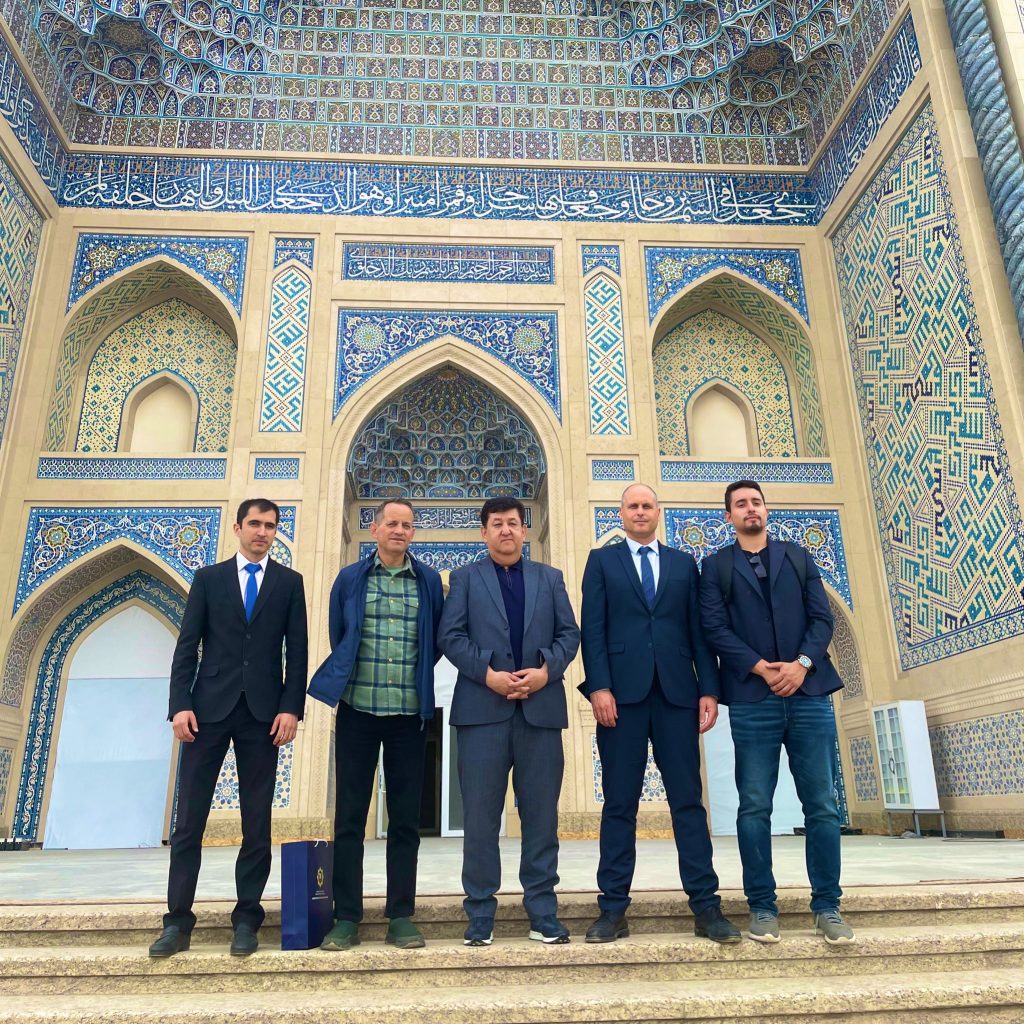
From April 15-20, Head of the Irwin Cotler Institute, Prof. Uriya Shavit, and Irwin Cotler Fellow for 2024-2025, Antonio Pena, traveled to Uzbekistan, for a series of meetings and events aimed at enhancing the academic and cultural relations between Israel and Uzbekistan, learning about the situation of the Jewish communities in Tashkent and Buchara, and briefing Uzbek officials on topical issues.
The visit was initiated and organized by Israel’s Ambassador to Uzbekistan, Gideon Lustig, who described it as a great success.
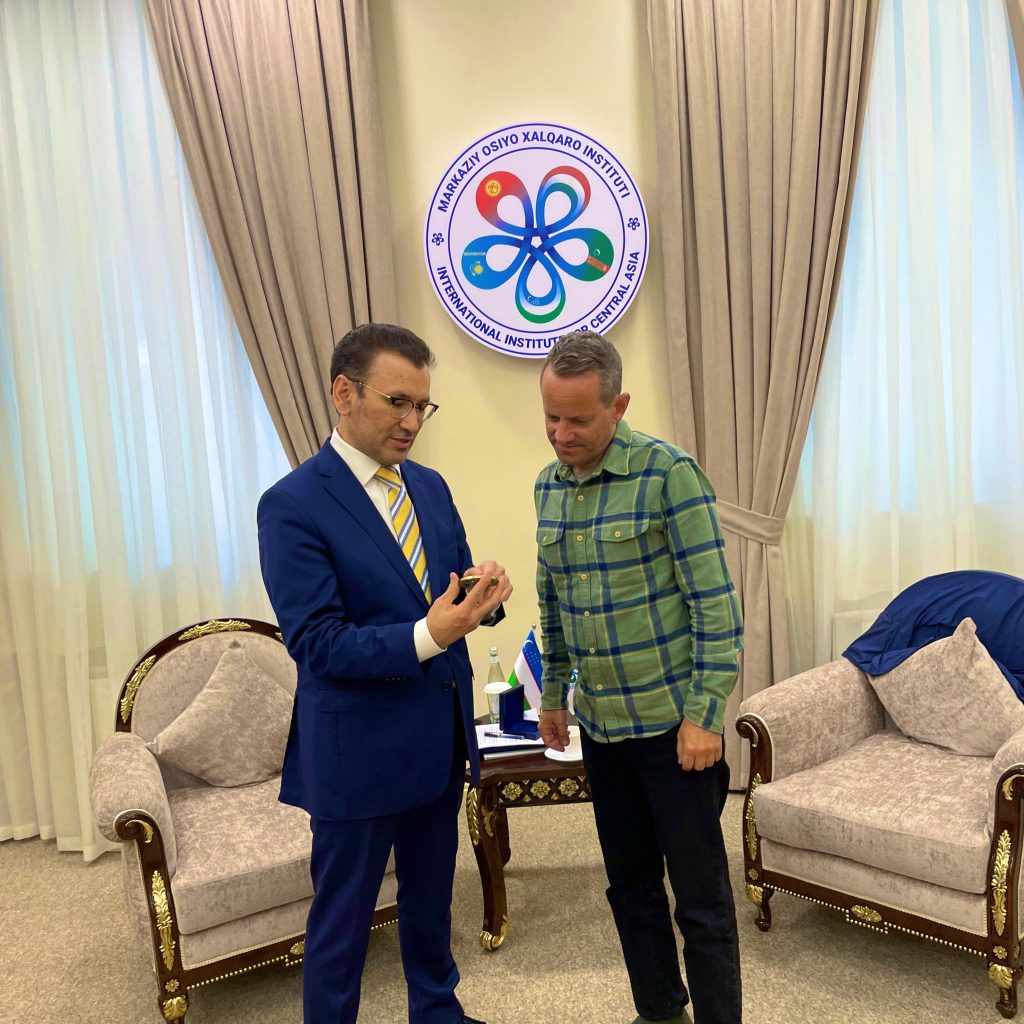
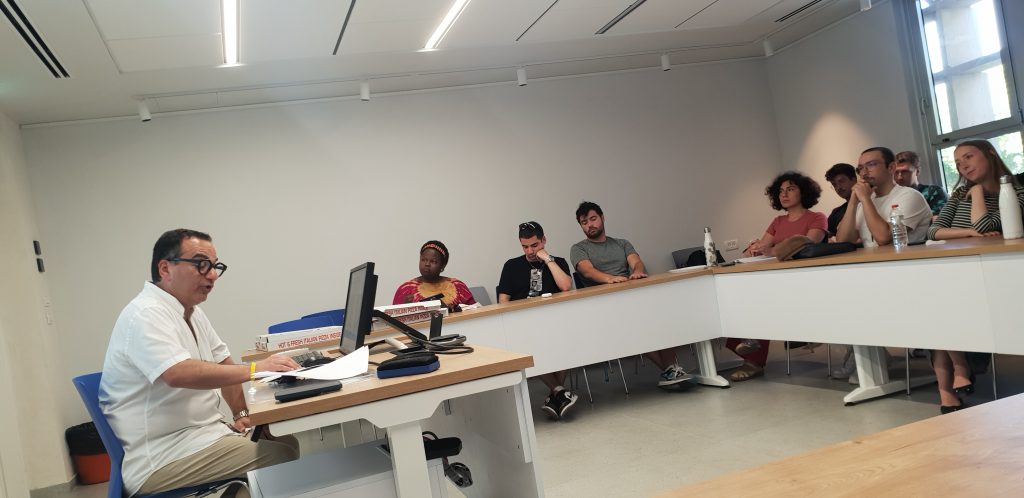
In Tashkent, the Cotler Institute delegation held meetings at The Center for Islamic Civilization (CIC), The International Institute for Central Asia (IICA), and the Institute for Strategic and Regional Studies (ISRS). Ambassador Lustig and Prof. Shavit explored with their hosts potential future academic collaborations and joint academic initiatives, while Mr. Pena presented The Irwin Cotler Fellowship Program as a key initiative, offering scholarships, leadership training, educational visits to Israel, and human rights engagement opportunities for Uzbek students.
Prof. Shavit and Mr. Pena also met with Arkadiy Isakharov, the leader of the thousand-person-strong Jewish community in Tashkent and chairman of the Tero Synagogue, one of two active Bukharian synagogues in the capital. In their discussion, Mr. Isakharov informed of plans for a new synagogue complex that will house museums for the Bukharian and Ashkenazi Jewish communities. He noted that when in November 2024 an antisemitic graffiti was drawn on the walls of the synagogue, the authorities arrested the offender within 24 hours.
In Tashkent, Prof. Shavit and Mr. Pena also met with the leading Uzbek journalist, blogger and Producer Nikita Makarenko, and discussed, among other topical issues, online radicalization and racism and the means to fight this phenomenon.
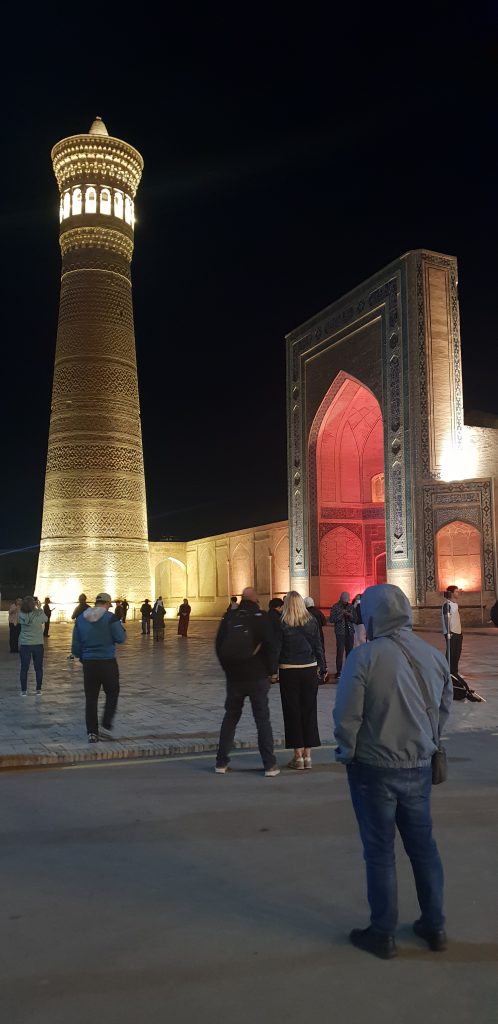
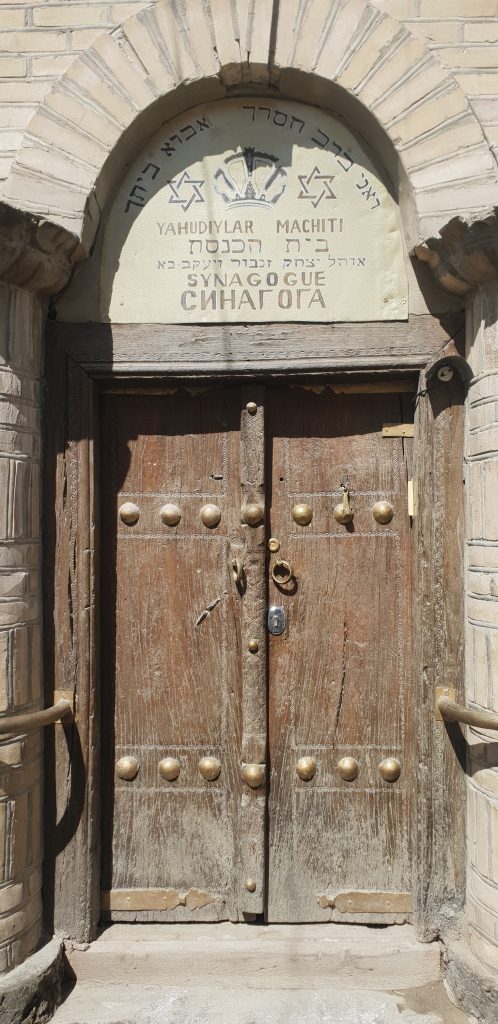
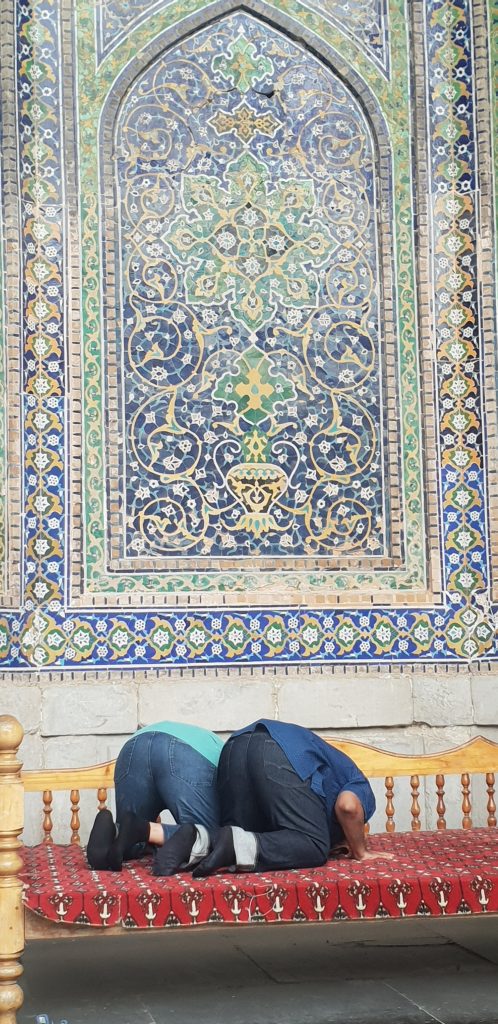
Following their time in Tashkent, Prof. Shavit and Mr. Pena traveled to Samarakand and Bukhara. In Bukhara, the ancient city along the Silk Road trade route, major medieval center of Islamic theology and culture, and once home to one of the largest Jewish communities in the world, they met with Rafael Elnatanov, the Chairman of the city’s Jewish community. Elnatanov shared with them the rich history of Bukharan Jews and highlighted the importance of preserving the community’s heritage and assisting those in need. He also observed that, while precuations have been taken, no local incidents of antisemitism have been reported since the October 7 attack, and noted the vital role his community plays as a bridge between Uzbekistan and Israel.
Informing Educators and Students from Bargarh to Colorado
In April, Prof. Uriya Shavit, Head of the Institute, and Dr. Carl Yonker, the Institute’s Academic Director, spoke with dozens of educators and students in India and the United States.
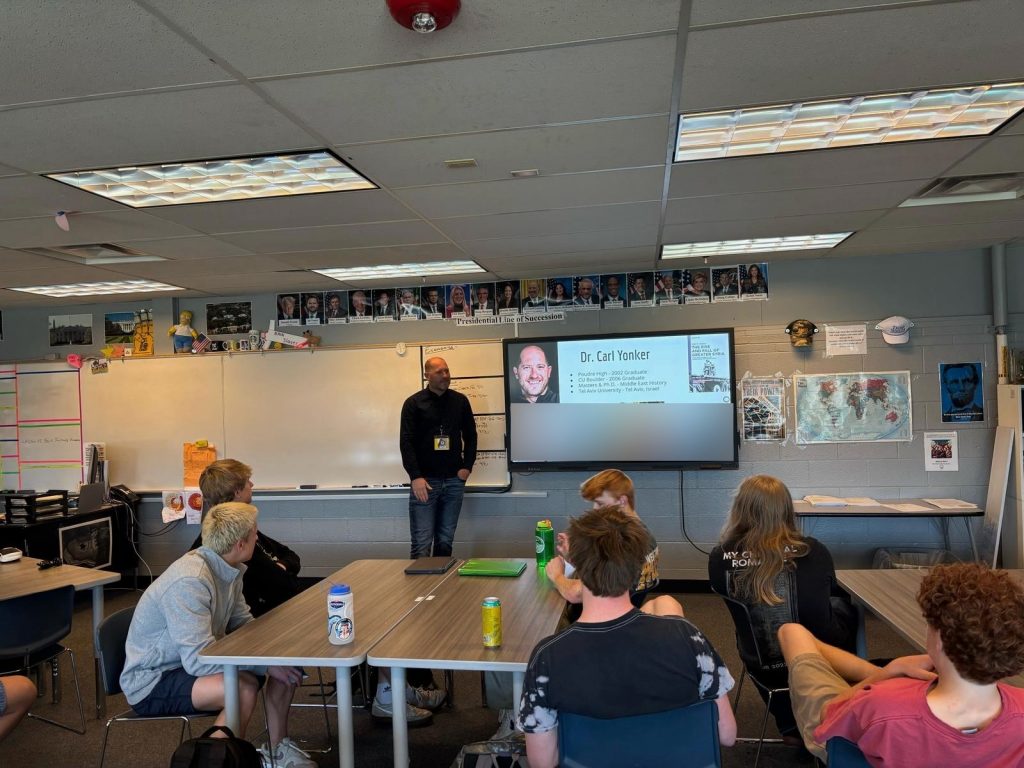
Over the Passover holiday, Dr. Yonker spoke to several dozen teachers and students in the social and historical studies department at Poudre High School in Fort Collins, Colorado. During his visit to his alma mater, Dr. Yonker addressed the current situation in Israel and its security challenges in Gaza and the region, the diversity of Israeli society, and his experience living in Israel. The thoughtful and insightful questions posed by students and teachers following his lecture led to an engaging and interesting discussion on the topics addressed.
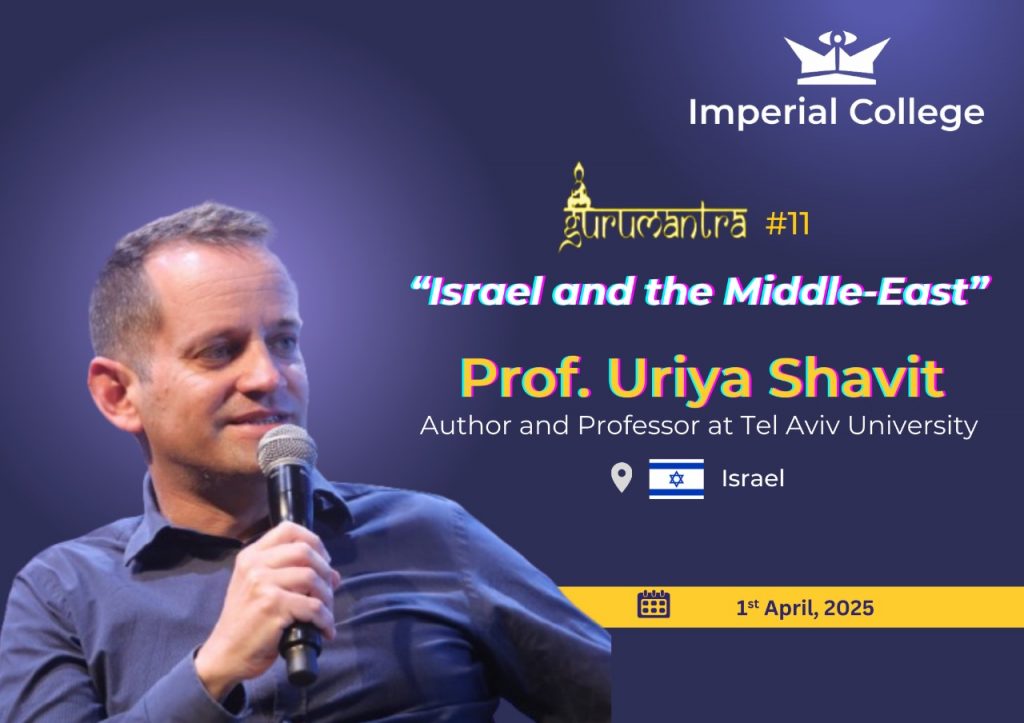
Earlier in the month, Prof. Shavit spoke to a group of over 70 students and faculty from the departments of political science, international relations, and history at the Imperial College – Bargarh in the Odisha state of India. Prof. Shavit’s lecture, delivered via Zoom, discussed a range of issues related to the current geopolitical situation in Israel, addressing the war in Gaza, Hamas’ genocidal ideology, the state of the Israeli economy, the humanitarian situation in Gaza, and Israel-India bilateral relations.
The lecture was organized by Mr. Jyoti Ranjan Pradhan, who studied in Tel Aviv University’s MA program in Security and Diplomacy in 2017-2018. Mr. Pradhan reflected on his time in Israel as a life-changing experience, fondly remembering his visits to Timna, the ultra-Orthodox Jerusalem neighborhood of Mea Shearim, and the Mahmoudiya mosque in Yafo.
Remembrance in Rwanda
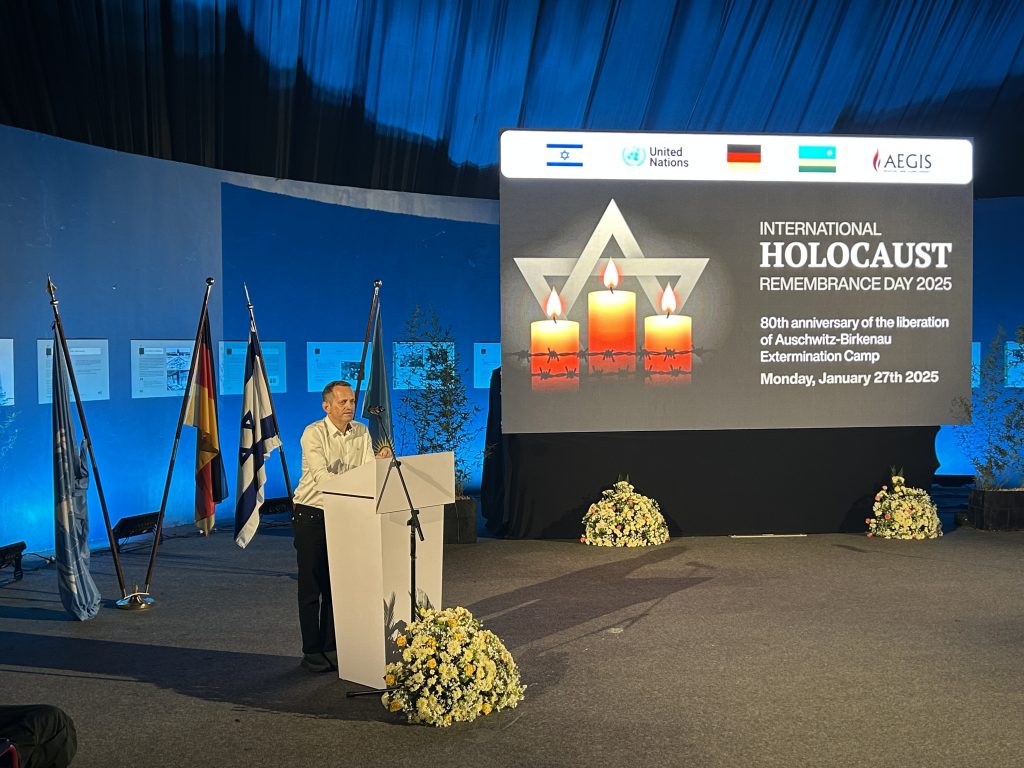
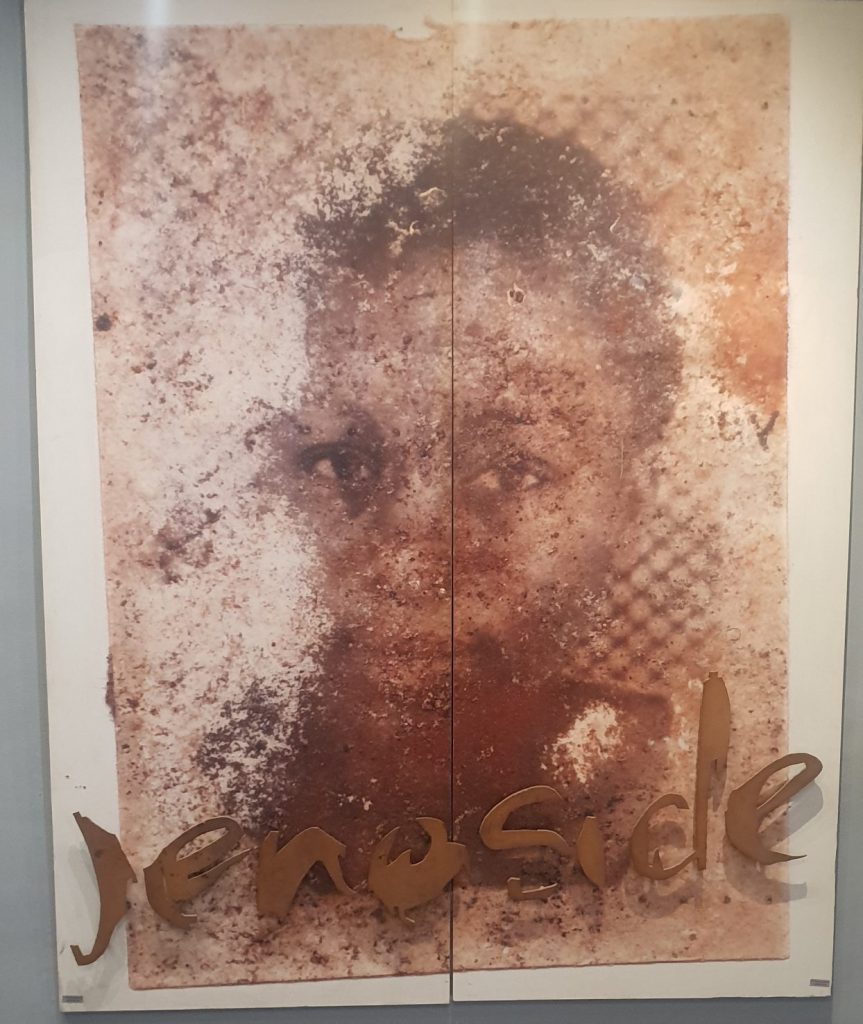
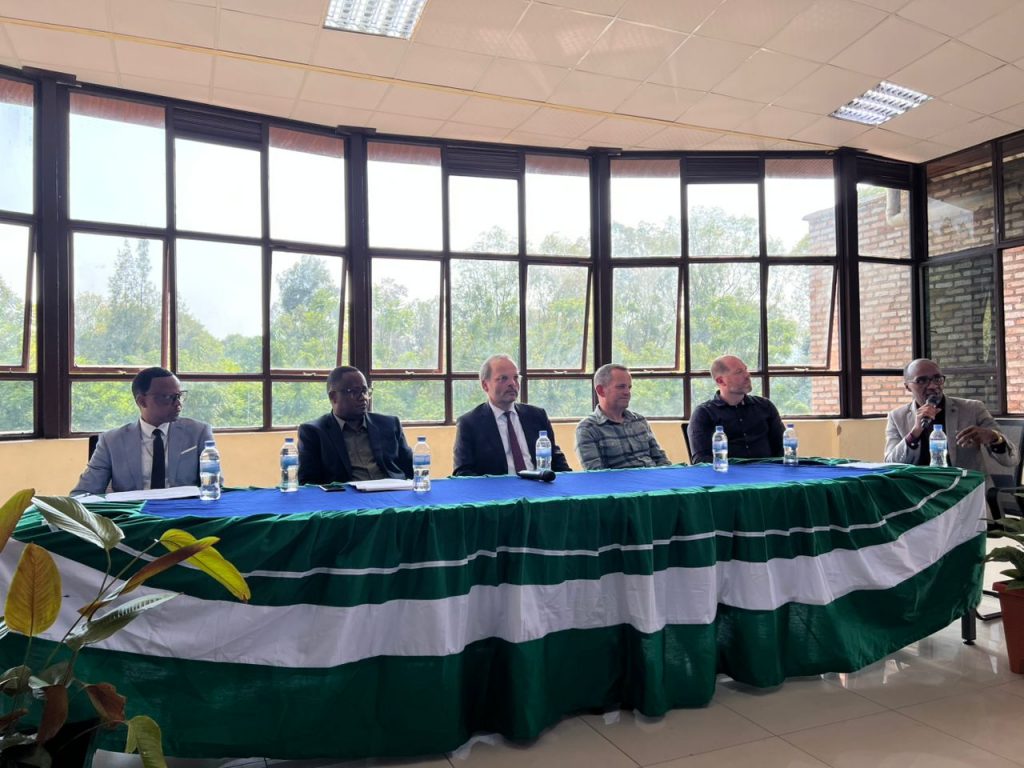
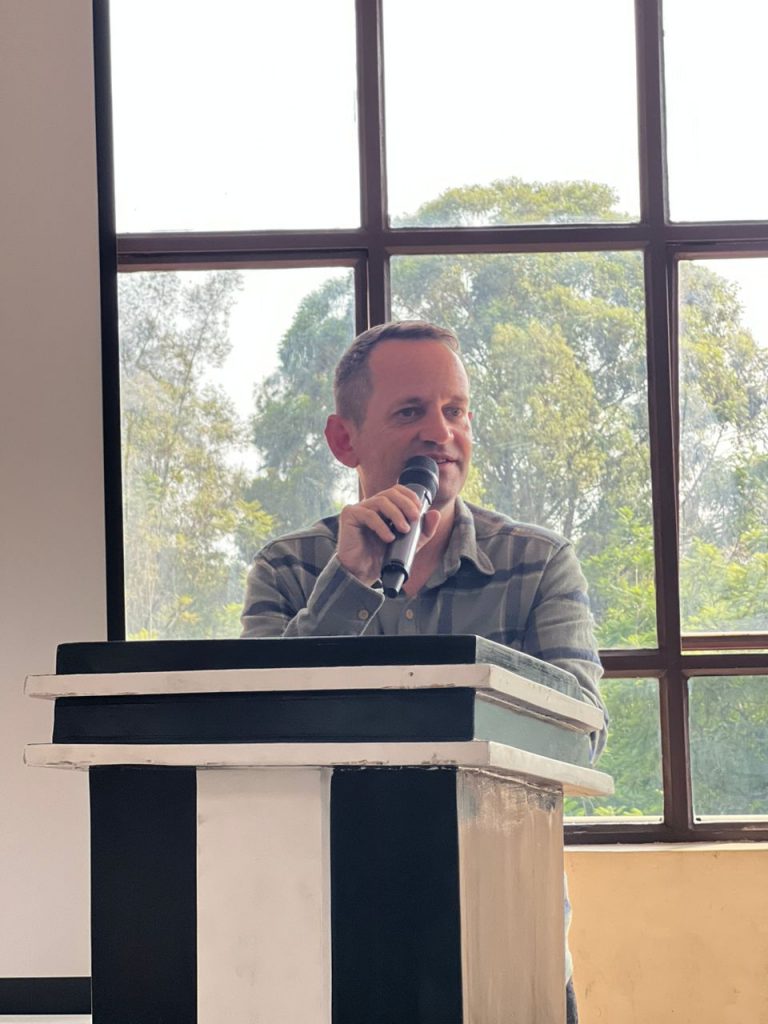
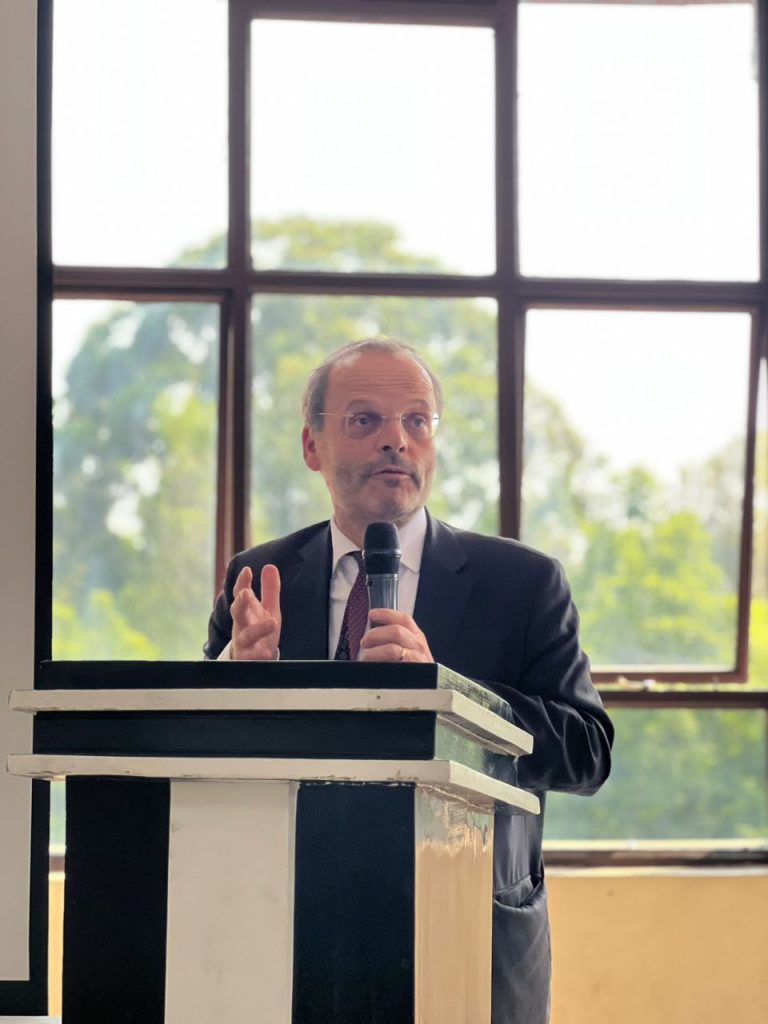
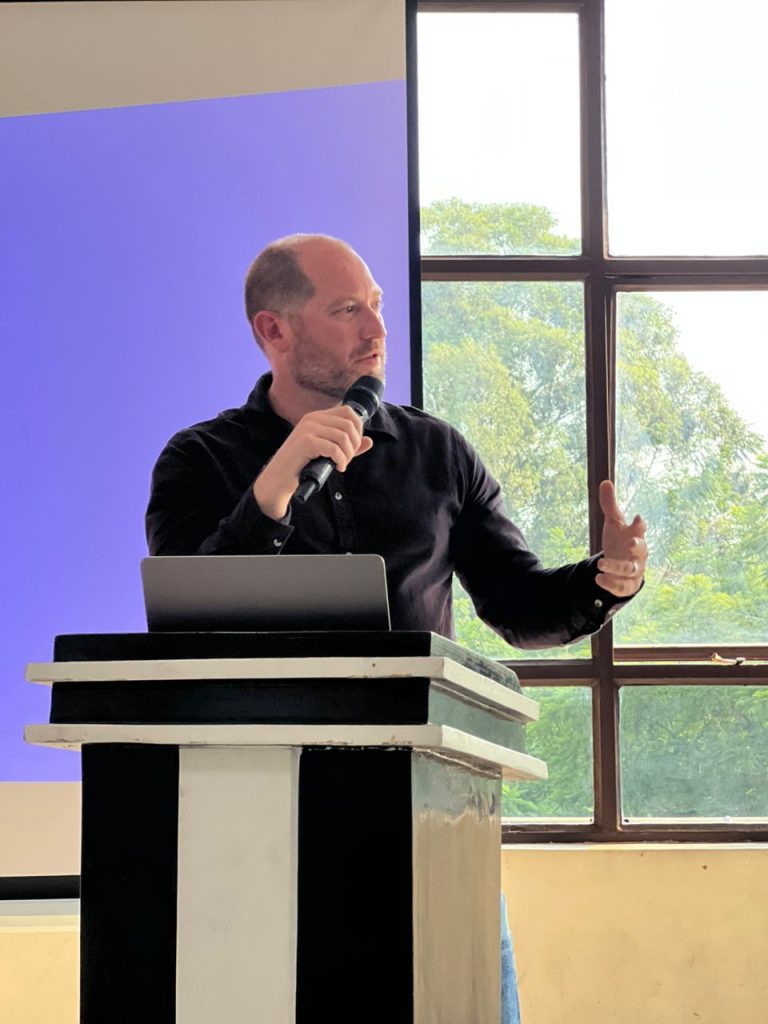
Representing TAU’s Cotler Institute for Democracy, Human Rights and Justice on behalf of the State of Israel, Prof. Uriya Shavit, Head of the Institute, gave an address at the annual joint International Holocaust Remembrance Day in Rwanda. The ceremony was organized by the Embassy of the State of Israel in Rwanda, the Embassy of the Federal Republic of Germany, the Government of Rwanda, and the Kigali Genocide Memorial. In his address, Prof. Shavit noted the beauty of Rwanda, its rapid development, the kindness of its people, and the strong ties it established with Israel. He spoke about the human capacity to commit evil and analyzed the reason for the proliferation of hate speech, racism, and antisemitism in the world today. He also spoke about the essentiality of defeating the annihilationist terror organization Hamas for the accomplishment of peace in the Middle East.
Other addresses at the ceremony were delivered by Dr. Felix Klein, German Federal Government Commissioner for Jewish Life in Germany and the Fight against Antisemitism,
Ambassador Heike Uta Dettmann, Germany’s Ambassador to Rwanda, and Ambassador Einat Weiss, Israel’s Ambassador to Rwanda. The guest of honor was Dr. Jean-Damascene Bizimana, Rwanda’s Minister of National Unity and Civic Engagement.
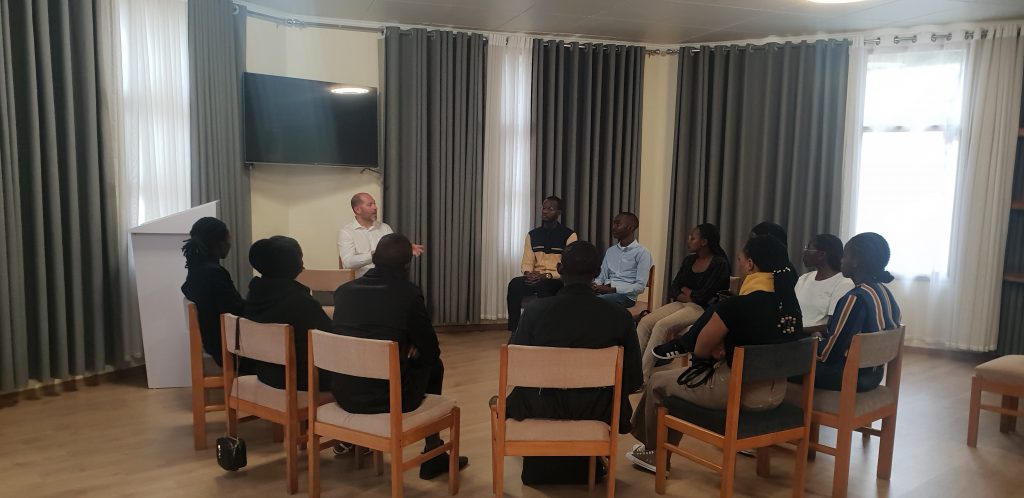
Prior to the ceremony, Dr. Carl Yonker, Academic Director of the Institute, spoke with a dozen university students about online hatred, why it has grown more widespread, its detrimental impacts on individuals and l societies, and ways to combat it. He encouraged them to be proactive in fighting back against online hate, reporting hate content when they see it, countering false narratives of genocide denial, and supporting those who are targeted by hate speech.
Prof. Shavit and Dr. Yonker also met with Mr. Freddy Mutanguha, CEO of the Kigali Genocide Memorial, and Mr. Honore Gatera, Director of the Kigali Genocide Memorial, where they discussed Rwanda’s history and ways memorials and museums can effectively preserve the memories of the Holocaust, the Tutsi Genocide and other genocides.
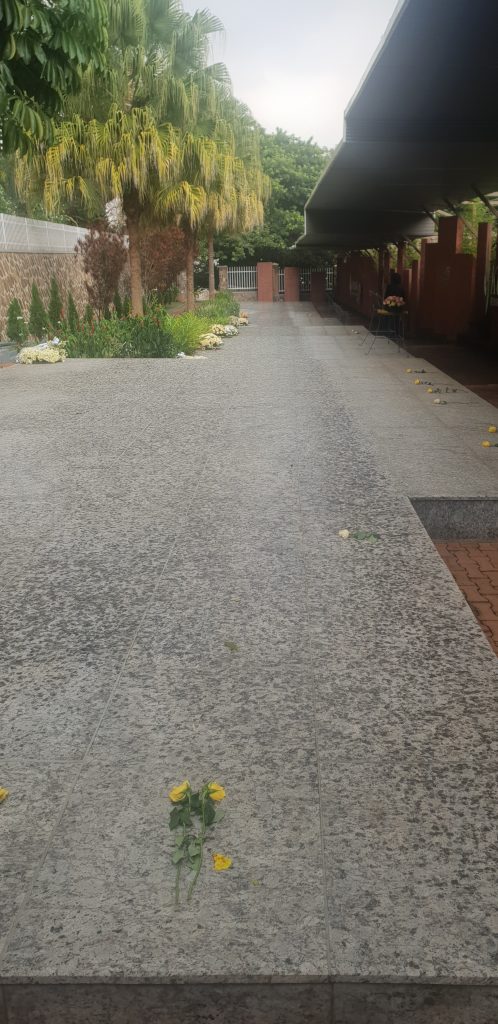
Prof. Shavit and Dr. Yonker shared their impressions of their visits to the Kigali Genocide Memorial Museum and the Campaign Against Genocide Museum located in the Rwandan Parliament Building. Together, the two museums relate the history of racial incitement and violence against the Tutsis prior to the genocide, how the genocide against the Tutsis was perpetrated, how the genocide was stopped, and reconciliation and rebuilding efforts. Both museums left a lasting impression, revealing the utter brutality and inhumanity of the perpetrators who tortured and slaughtered their neighbors – men, women, and children.
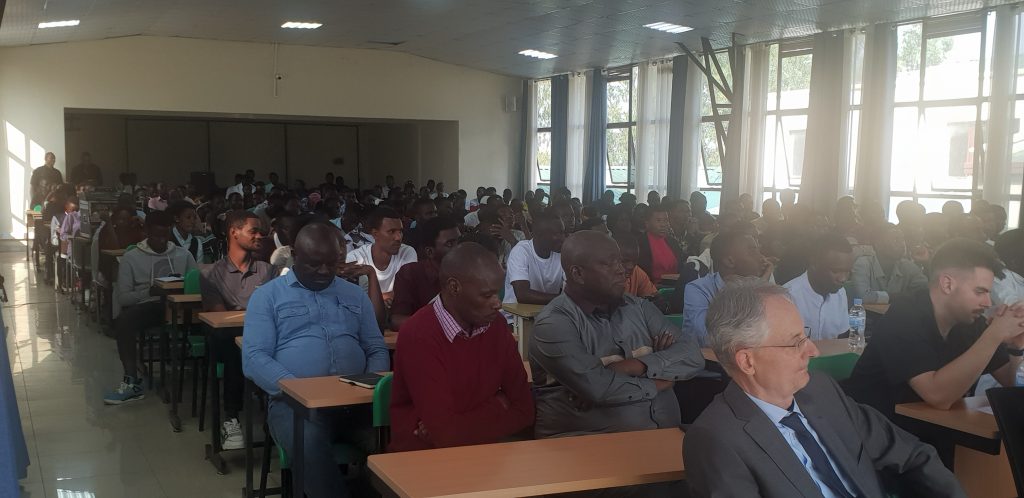
The day after the ceremony, Prof. Shavit and Dr. Yonker traveled south to the city of Huye to participate in a panel on the culture and practice of remembrance organized by the University of Rwanda’s School of Governance, Development, and Society, together with the Israeli and German embassies in Rwanda. The panel, which also included German Federal Government Commissioner Dr. Klein and University of Rwanda researcher Dr. Eric Ndushabandi, addressed an audience of two hundred students, instructors, and professors at the university on the culture and practice of remembrance.
Prof. Shavit noted that the Holocaust demonstrates that education alone is no guarantee for moral action. He advised the students that they should not learn about the Holocaust from Hollywood movies or Netflix. Instead, they should read books, watch documentaries and obtain knowledge through dedicated learning. Prof. Shavit also emphasized the need not to reduce Jewish history to the Holocaust and think of Jews only as victims, but rather to recognize the incredible cultural and scientific contributions Jews have made throughout history. He stated, “Though Jews are only 1 in 400 of humanity at large, Jews have won 1 in 4 Nobel Prizes in the sciences.”
In his presentation, Dr. Yonker noted the importance of remembrance and education so that students and others are equipped and capable of countering false narratives of genocide denial and hate speech when they appear online and can warn of the danger of such speech and its harmful implications.
In addition, Prof. Shavit and Dr. Yonker met with the leadership of Mount Kigali University to discuss and explore opportunities for academic cooperation and exchanges with Tel Aviv University.
Thanks to the organizers, Prof. Shavit and Dr. Yonker were also able to experience Rwanda and learn about its history, including a visit to the King’s Palace in Nyzana, with modest royal thatched canopy dwelling and its majestic heard of long-horned Inyambo cattle, from which Rwandan kings rule from the 15th century until 1962.
Making a Difference in Portugal
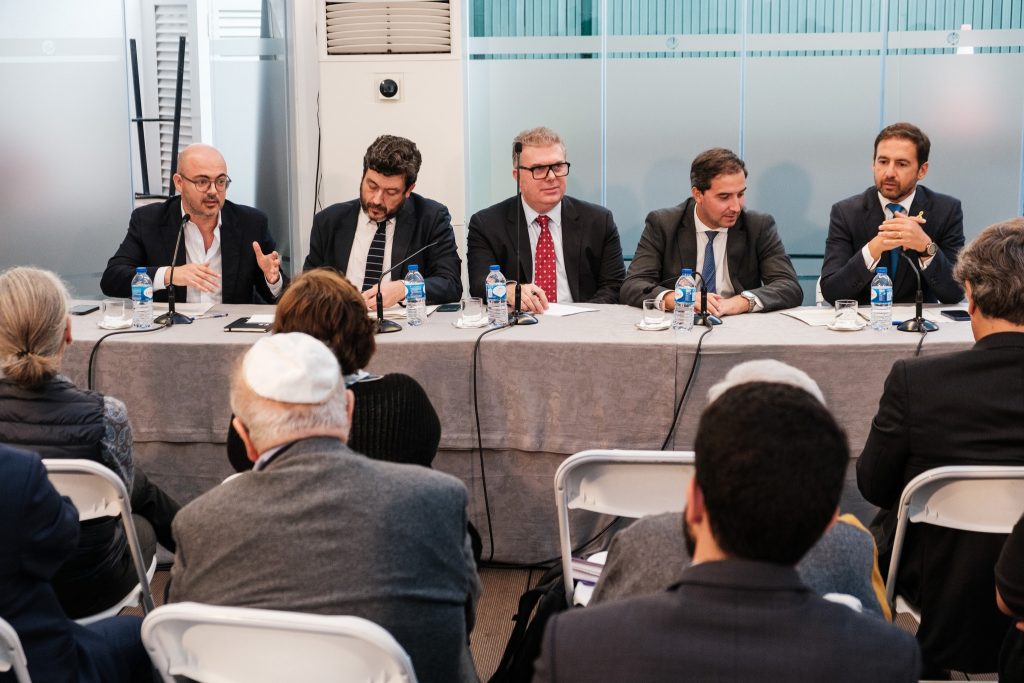
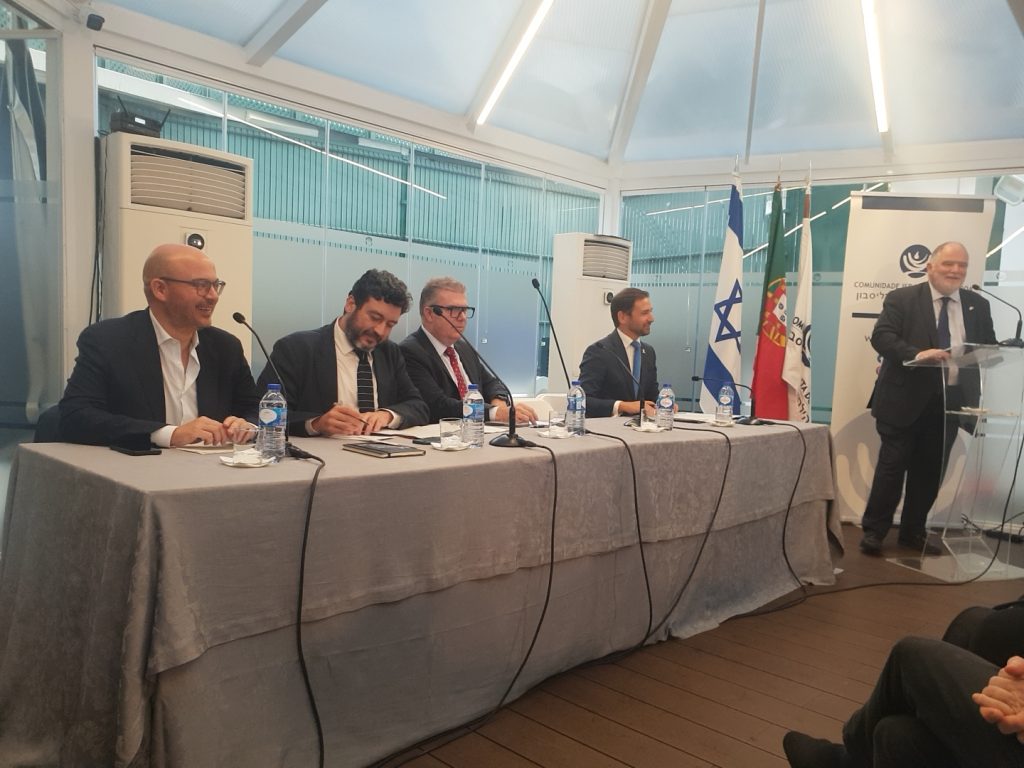
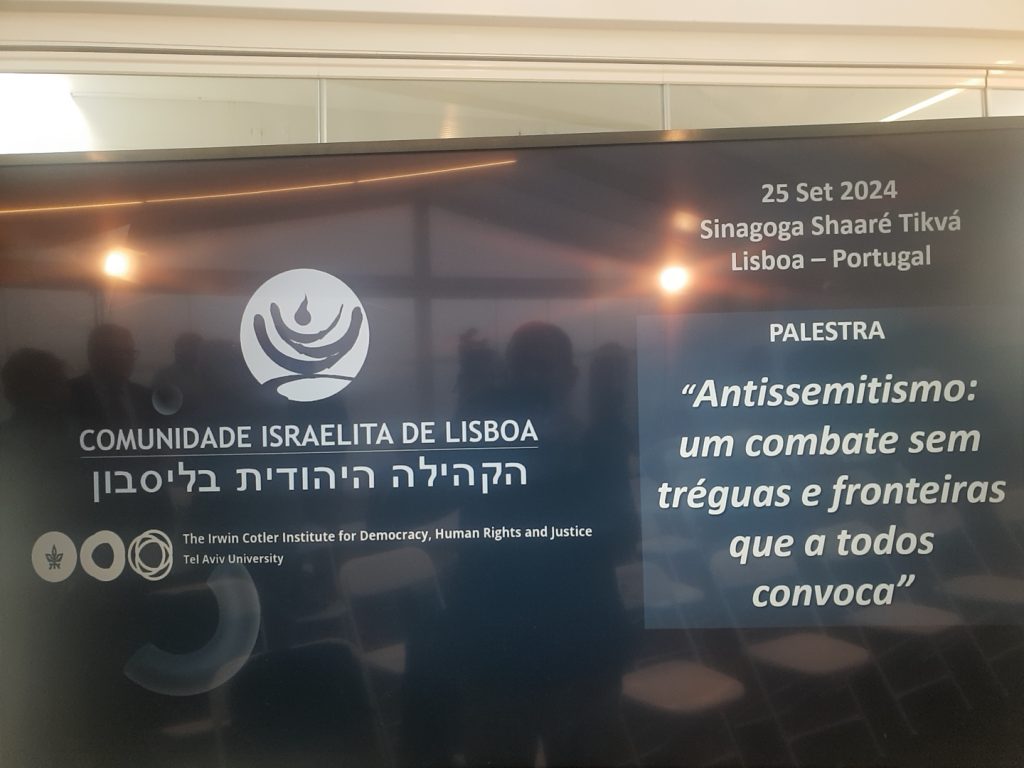
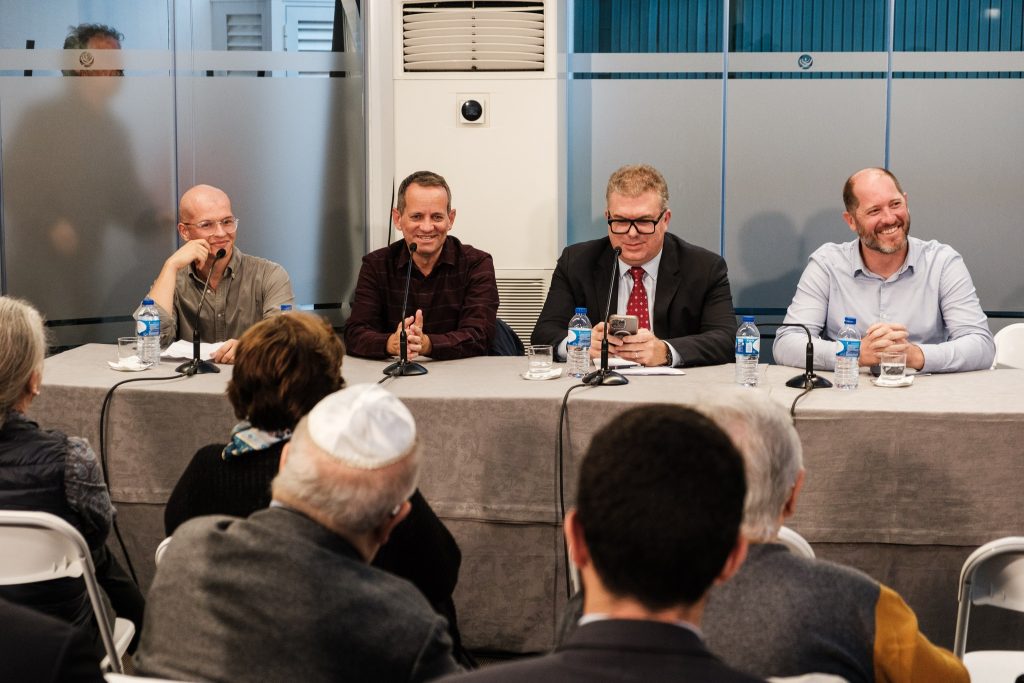
In an exceptional show of solidarity, on September 25th, four senior members of the Portuguese parliament, representing the four main political parties and 90 percent of the Portuguese political landscape, attended an event initiated by a 2023-2024 Irwin Cotler Fellow, João Reis, and organized by the Irwin Cotler Institute and the Lisbon Jewish Community, in the courtyard of the Shaaré Tikvah Synagogue in Lisbon, entitled “Antisemitism: A Fight without Borders That Calls on Everyone.”
The event, packed to the brim, was attended by a number of other senior officials, including a personal representative of the Portuguese Chief of Staff, and Ambassador Manuela Franco, National Coordinator of the European Strategy to Fight Antisemitism and Promote Jewish Life.
The four members of parliament, MP Pedro Frazão (Chega Party), MP Pedro Delgado Alves (Socialist Party), MP Rodrigo Saraiva (Deputy Speaker of Parliament – Liberal Party), and MP Alexandre Poço (Social Democratic Party), addressed the importance of the IHRA definition and the need for a zero-tolerance policy towards antisemitism. As representatives of rival factions, their joint presence at the event sent a powerful message of commitment.
Prof. Uriya Shavit, Head of the Cotler Institute, noted that Portugal’s peaceful revolution of April 25, 1974, charted the way for what political scientists term as “the third wave of democratization” that swept the world until the late 1990s and is now in alarming retreat. He elaborated on the reasons for the recent global rise in antisemitism attacks, as well as urged participants to read the Charter of Hamas for themselves, noting that those who wish to advance peace in the region should be the first to demand the total, unmitigated defeat of Hamas.
Dr. Carl Yonker, Academic Director of the Institute, spoke about online hatred and presented an operational framework for combatting the phenomenon.
João Reis, a 2023-2024 Cotler Fellow, shared about his experience as an international student in Israel following October 7.
David Botelho, President of the Jewish Community in Lisbon, argued in his speech that Jews in Portugal enjoy good cooperation with homeland security, which helps keep antisemitic incidents at a very low level.
Jose Eduardo Vera Cruz Jardim, President of the Commission for Religious Freedom, offered closing remarks.
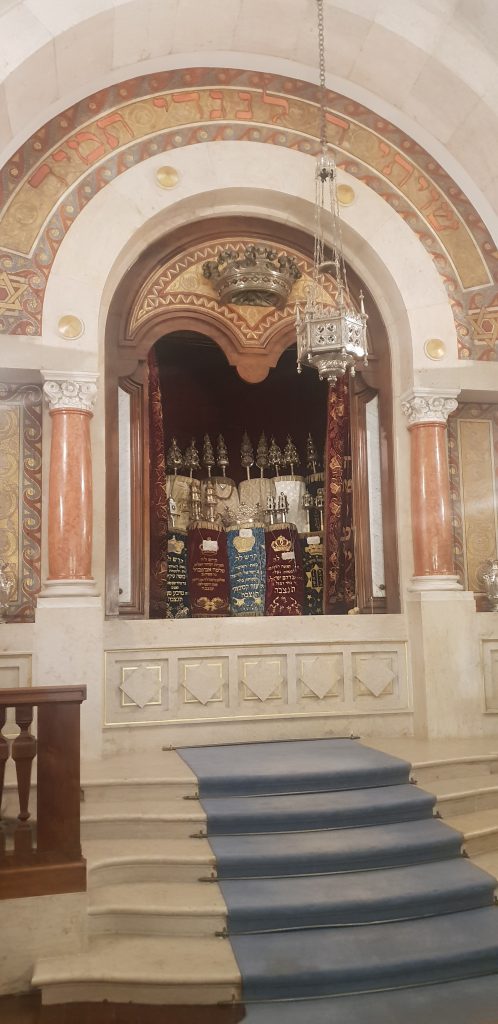
Following the event, the MPs and all other guest enjoyed a visit to the synagogue, in which Joao Oliviera, head of the board of the Jewish Community, provided brief explanations about Jewish traditions.
A day before the event, Prof. Shavit gave an interview on the current situation in the Middle East to Portugal’s national news agency, that was syndicated to several Portuguese language media. Separately, the Cotler Institute team met with the leaders of the community to learn about its current situation and plans.
New Zealand Seminars
In July 2024, The Irwin Cotler Institute led a ten-day series of seminars and public lectures with senior officials as well as with members of the Jewish communities in Wellington and Auckland, New Zealand. Since October 7, New Zealand has witnessed a strong public anti-Israel sentiment, and a rise in the number of antisemitic incidents.
Senior members of the Jewish communities hailed the lectures and seminars as exceptionally empowering and informative, and noted that the tour raised awareness among government agencies about the reality of antisemitism and helped establish new channels for communication and cooperation with the government.
The tour was initiated by Markus McCraith, Irwin Cotler fellow in the 2023-24 cohort.
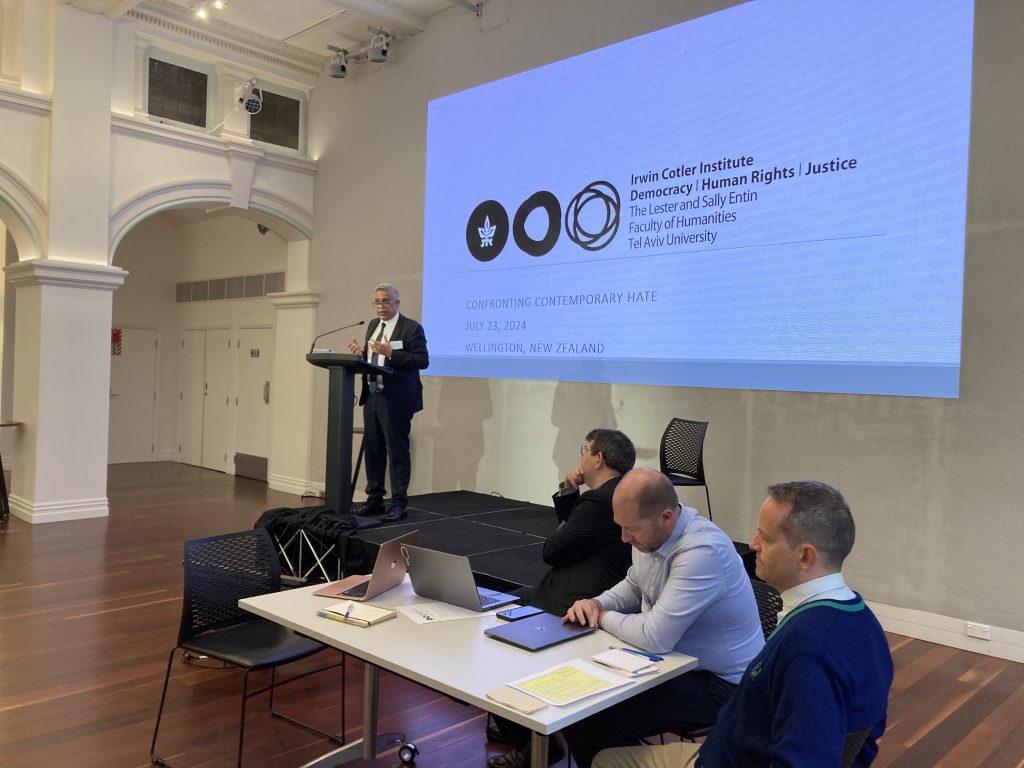
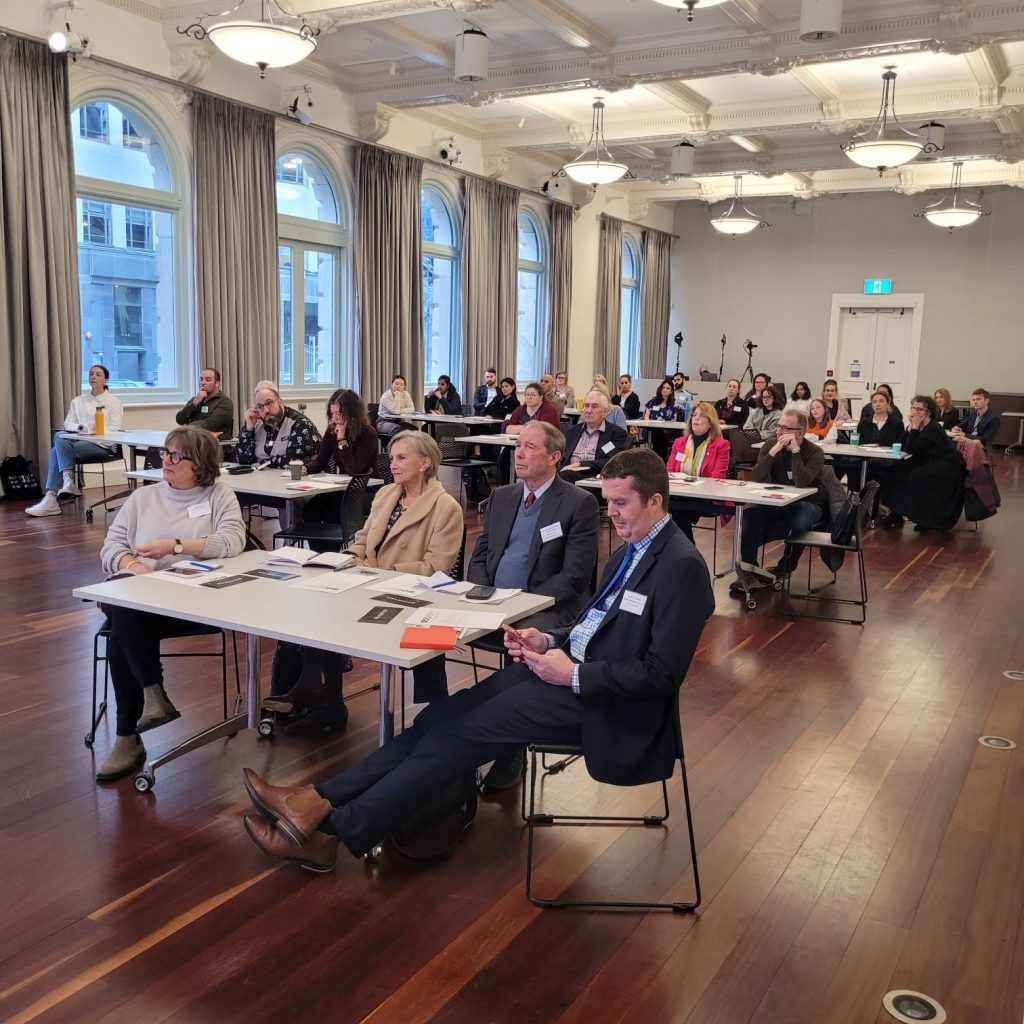
The tour began on July 23, 2024. The Irwin Cotler Institute, in partnership with the New Zealand Ministry for Ethnic Communities, the Astor Foundation, the Holocaust Centre of New Zealand, and the New Zealand Jewish Council, delivered a seminar addressing the topic of ‘Confronting Contemporary Hate’. The event was held at the esteemed Public Trust Hall in Wellington, New Zealand, with over 70 people in attendance. Participants included officials from the Ministry of Education, the Ministry of Foreign Affairs, the New Zealand Police, the Department of the Prime Minister and Cabinet, Victoria University of Wellington, the Human Rights Commission, the New Zealand Law Commission, the Jewish community, the City Council, and more. Additionally, the US Ambassador to New Zealand, Tom Udall, and his wife, Jill Cooper, were in attendance.
The event began with remarks from event host Dr. Giacomo Lichtner, (Associate Professor of History at Victoria University of Wellington and Deputy Chair of the Holocaust Centre of New Zealand), who introduced the audience to the mission of the Irwin Cotler Institute in advancing human rights, justice, and democracy, and in combating racism and antisemitism. Dr. Lichtner hailed the contribution of Prof. Irwin Cotler to the causes of justice and equality and the fight against antisemitism and racism at large across the world.
His opening words were followed by remarks from Mervin Singham, the Chief Executive of the Ministry for Ethnic Communities, who spoke passionately about the positive contribution of Jews to New Zealand society but also the worrying trends of rising antisemitism, particularly after October 7, emphasizing the need to combat it through genuine human connection. He encouraged Jews in New Zealand to express their identity boldly.
Prof. Uriya Shavit, Head of the Institute, delivered the event’s first lecture, ‘Hate: Why is it Spreading in Our World?’, reflecting on the causes and manifestations of contemporary hate, and what can be done about it. This was followed by Dr. Carl Yonker’s lecture, ‘Online Hatred and the Means to Combat It’, where he delved into the factors contributing to the rise of online hate. Following a morning tea and mix and mingle, Dr. Yonker, the Academic Director of the Institute, delivered his second lecture, ‘Contemporary Antisemitism in Western Societies’, in which he explained what contemporary antisemitism looks like and where it is coming from, with an emphasis on the explosion of antisemitism around the world, including in New Zealand, after October 7. Practical steps were given on how to combat it. The event ended with a Q&A session, in which much engaging discussion took place between the guests and Prof. Shavit and Dr. Yonker.
Other seminars and public lectures followed through the next eight days. The Holocaust Center of
New Zealand hosted the Institute for a seminar for 23 teachers and educators across the country on online hate and addressing antisemitism in schools. After speaking on these topics, Dr. Carl Yonker fielded questions from the participants and heard about their experiences and challenges as educators in New Zealand in addressing antisemitism in their classrooms and in their schools following October 7.
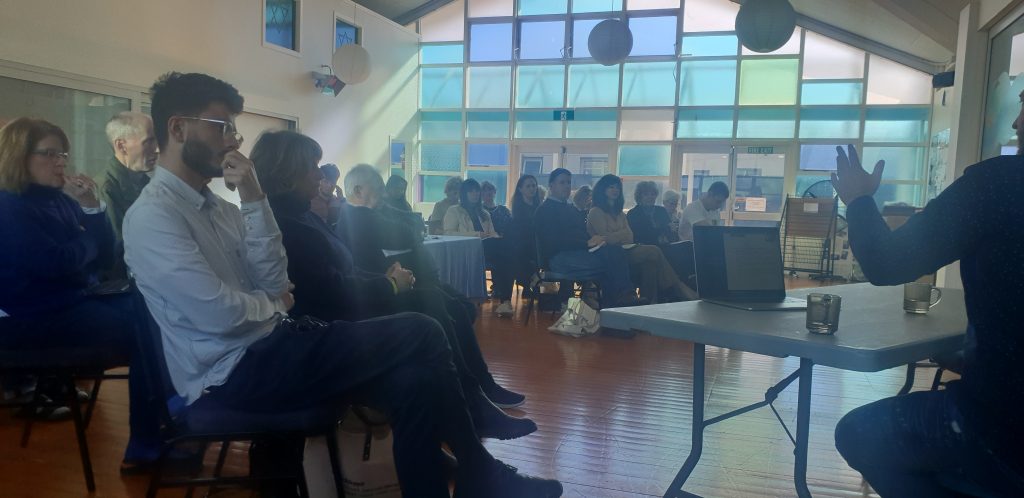
The Holocaust Centre of New Zealand in Wellington kindly provided their showroom for a public lecture by Prof. Uriya Shavit, organized in partnership with the New Zealand Jewish Council and the Astor Foundation. Attendees were largely from the Wellington Jewish community. Prof. Shavit spoke about the importance of reading the Hamas Charter to understand first-hand the nature of the war Israel is fighting, and explained why it is essential for the war to end with the total elimination of Hamas. He also spoke about the challenges of defining Jewish identity in the 21st century. The discussion and debates that followed demonstrated the diversity within the small Wellington community.
In Auckland, the Irwin Cotler Institute delivered a seminar and hosted a discussion on the topic of ‘Challenges of Jewish Identity in the 21st Century’ at the Beth Shalom Synagogue. Deborah Hart, chair of the Holocaust Centre of New Zealand, opened the event and moderated throughout. The New Zealand Jewish Council and the Astor Foundation took part in the organization of the event. Forty-five people from the Auckland Jewish community came in person, with several dozen attending online.
Prof. Shavit delivered the event’s first lecture, on ‘Israel, the Middle East, and Jewish Communities after October 7’, while Dr. Carl Yonker delivered the second lecture on ‘Online Hate: Trends and Counter-Measures’. This was followed by a very engaging Q&A and discussion, where some in the audience members had questions and comments related to Jewish identity, Israel, combating antisemitism, and more.
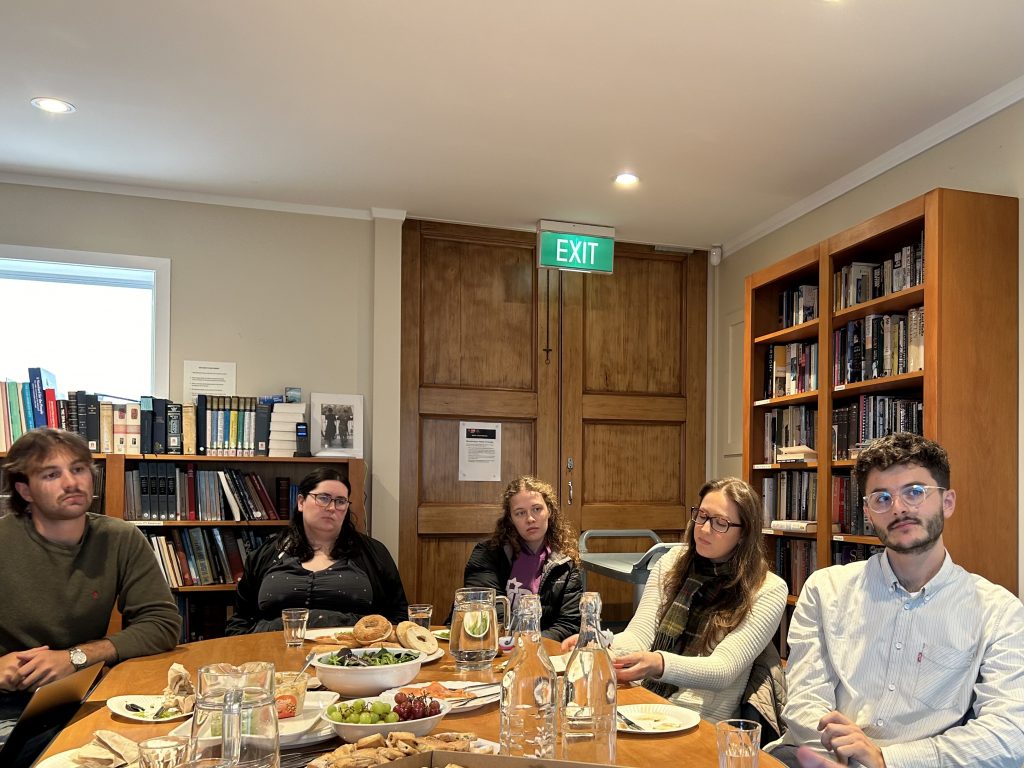
In the same venue, Prof. Shavit, Dr. Yonker, and New Zealand Fellow Markus McCraith held a roundtable discussion with members of the New Zealand branch of the Australasian Union for Jewish Students. Participants shared their experiences as New Zealand Jews generally, and on university campuses specifically, with a keen interest to hear from the Cotler Institute ways in which they can combat antisemitism they face and take part in refuting false accusations and distorted historical analogies made against Israel. The young students were very eager, and the conversation was engaging and fruitful.
The New Zealand tour also included a number of informal meetings with public officials, which, as is often the case, were as important as the formal ones.
Antisemitism in Canada
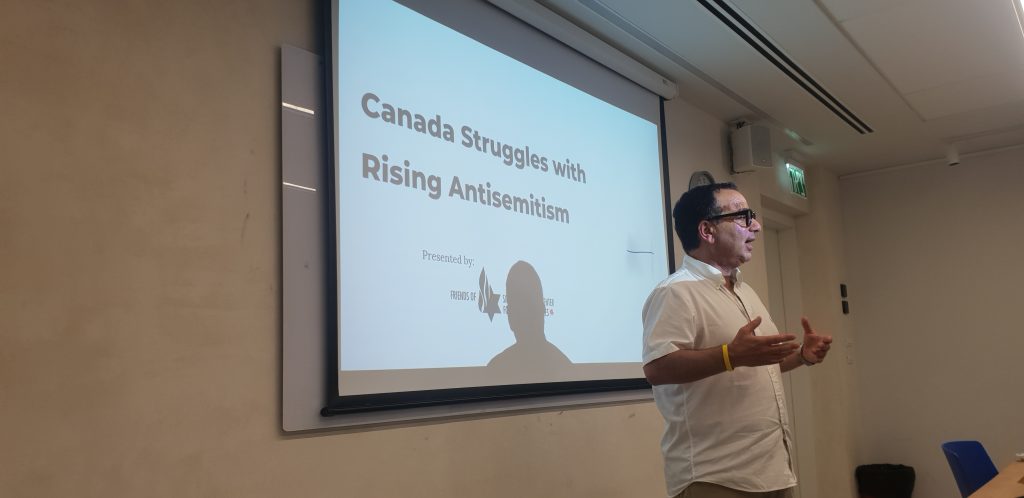
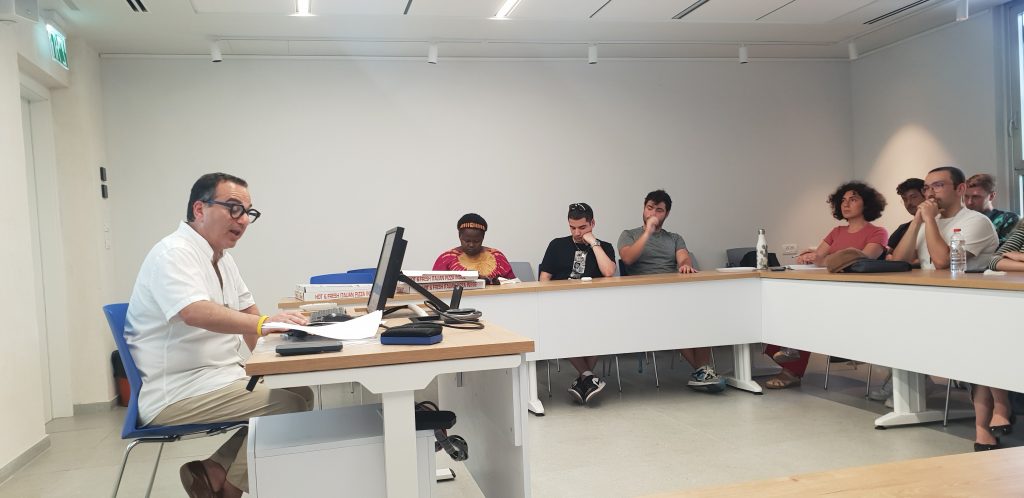
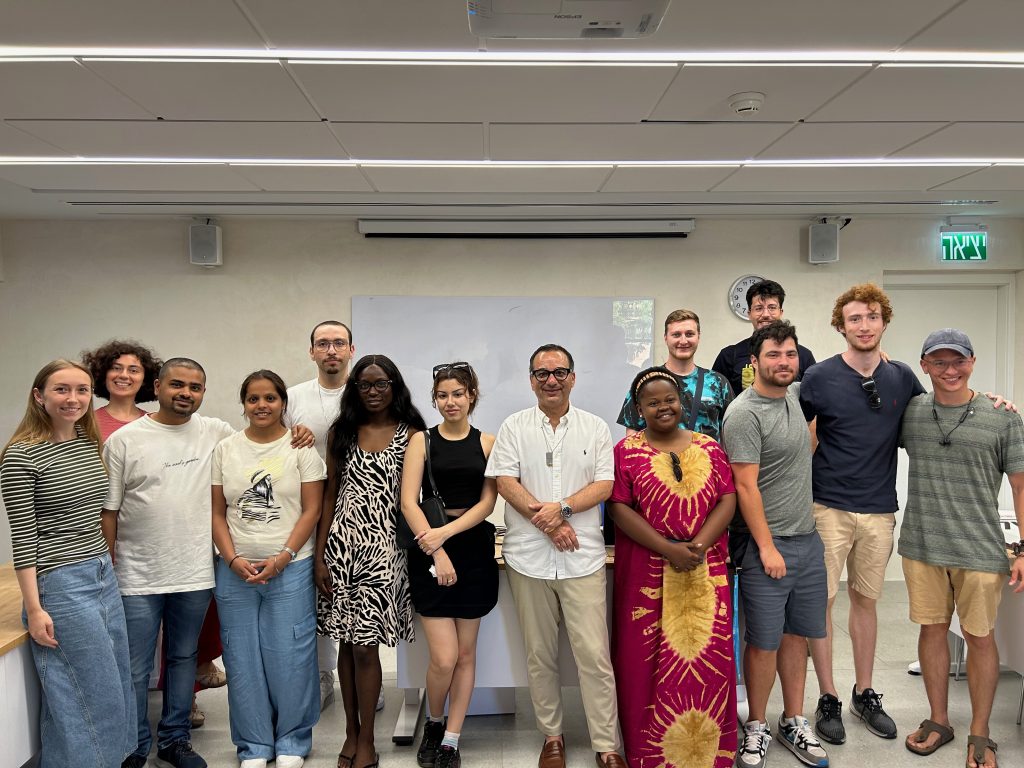
On Sunday, June 30, the Institute hosted Michael Levitt, the CEO and President of the Friends of Simon Wiesenthal Center for Holocaust Studies. Mr. Levitt, who served as a member of parliament in Canada from 2015 to 2020 and was Chair of the House of Commons Foreign Affairs Committee and Chair of the Canada-Israel Interparliamentary Group, delivered an engaging presentation to the Fellows and other TAU International Students on antisemitism in Canada. His talk highlighted the main trends in antisemitic incidents in Canada in recent years and discussed numerous examples of antisemitic incidents that have occurred since October 7. He also discussed the work of the Wiesenthal Center in advancing Holocaust education and combatting antisemitism.
Reviving Hebrew and the Ultra-Orthodox
On Sunday, June 2, the Cotler Fellowship hosted two guests to give the final lectures for this year’s program. Dr. Sima Zalcberg, a scholar of the ultra-Orthodox community in Israel, delivered an engaging talk to the fellows, discussing how and why the ultra-Orthodox function as an “enclave culture” within Israeli society. Dr. Zalcberg then delved into the intricacies of marriage arrangements within Haredi society, highlighting the various aspects and layers involved in the process. Her discussion covered the roles of matchmakers, the ways potential matches are introduced, and the considerations families take into account when selecting a suitable match.
After Dr. Zalcberg, the Fellowship was honored to host Mr. Gil Hovav, a leading culinary journalist and TV personality in Israel, who spoke about his great-grandfather Eliezer Ben-Yehuda and the revival of the Hebrew language. The lecture was filled with fascinating, humorous, and, at times, almost unbelievable stories of his great-grandfather’s life journey and his dedicated mission to revive Hebrew in the Jewish homeland—a mission that succeeded in ways one could have never imagined. The story of the revival of modern Hebrew is the story of Jewish survival, of unwavering determination, of the success of Zionism; and some would argue, the story of a miracle.
Cotler Institute at the Board of Governors 2024
The Institute hosted two events at Tel Aviv University’s recent Board of Governors meeting: a plaque ceremony marking the Institute’s official dedication and the first forum hosted by the Institute.
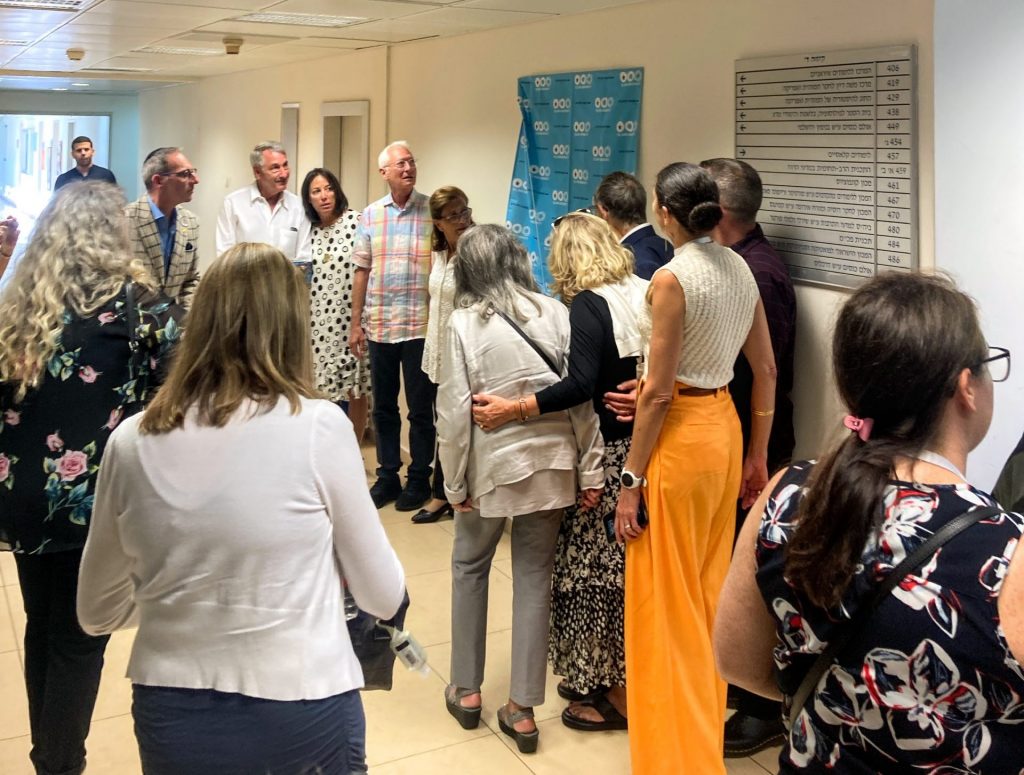
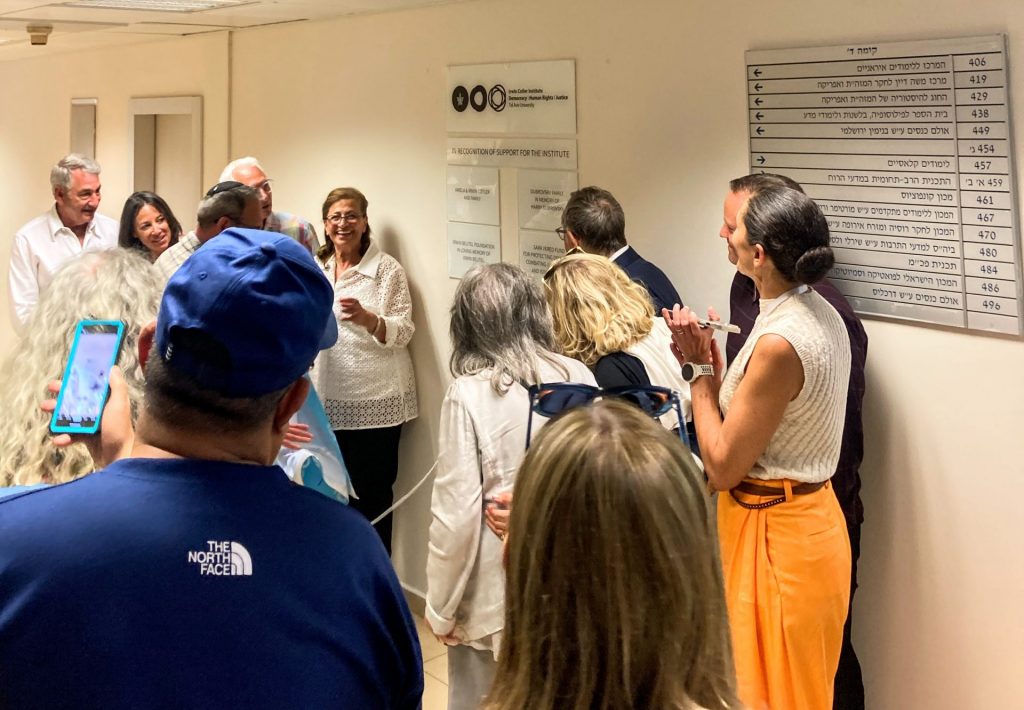
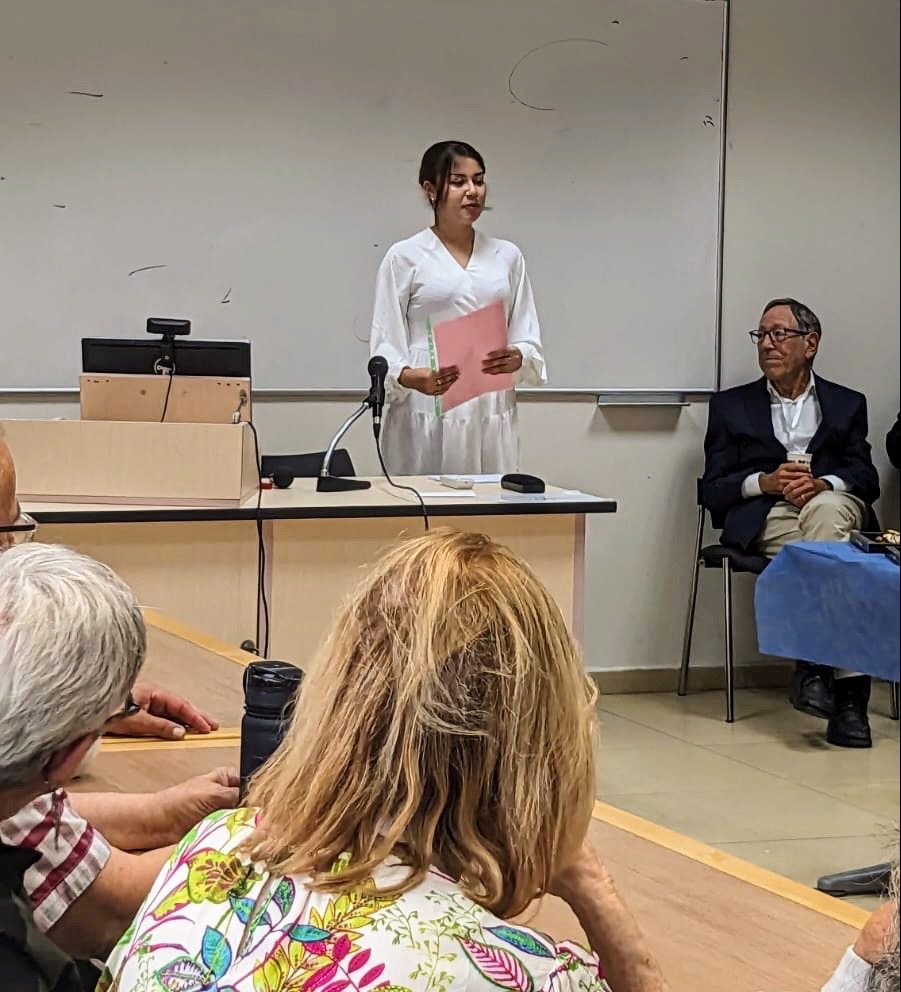
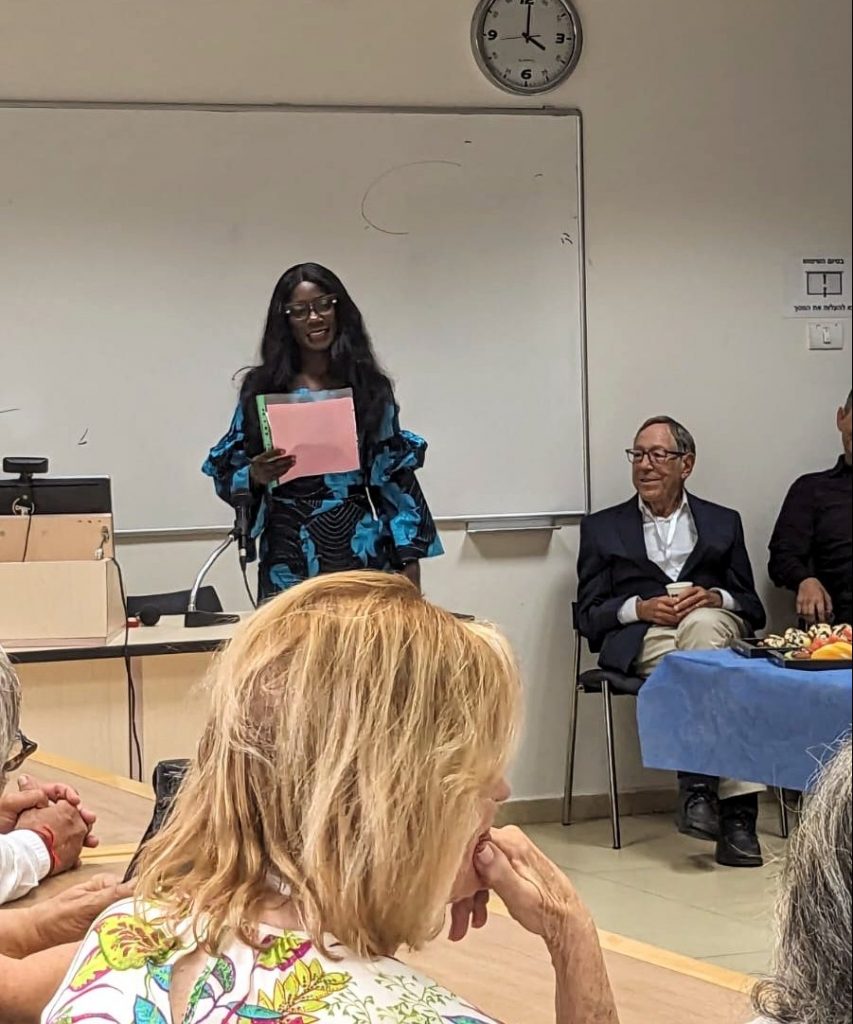
The plaque ceremony honored key donors of the Institute, and was attended by donors and Friends of TAU from Canada, the Hon. Irwin Cotler, Dafna Meitar (Head of the TAU Board of Governors), and Prof. Rachel Cinamon Gali (Dean, Faculty of Humanties), as well as the 2023-2024 fellows of the Irwin Cotler Institute’s flagship fellowship program. Those in attendance heard from two current fellows, Dacha Azelmad (Morocco) and Veronica Pana Igube (Nigeria), who shared the transformative and deeply insightful experiences they have had through the fellowship program. Additionally, the Hon. Irwin Cotler spoke about the institute’s mission, its remarkable progress over the past two years and its future directions, expressing gratitude to the donors for their support in making this possible. Following this, the official plaque of the Irwin Cotler Institute was unveiled in the Gilman Building at Tel Aviv University.
Alongside the plaque ceremony, the Institute inaugurated the Irwin Cotler Institute Forum at the 2024 Tel Aviv University Board of Governors. This year’s forum focused on the subject of “Democracy, Antisemitism, and the Assault on Human Rights.”
The Hon. Rosalie Sliberman Abella (Samuel and Judith Pisar Visiting Professor at Harvard Law School; Retired Justice of the Supreme Court of Canada) spoke passionately and urgently about the rise of international human rights law following the Holocaust, and the need, now more than ever, to return to the legal and moral principles that arose out of the horrors of the Second World War. Expressing concern over a world increasingly tolerant of intolerable acts in the name of moral relativism and political pragmatism, Abella called for a serious reassessment of our current global institutions, particularly the United Nations. She emphasized the need for stronger mechanisms to protect human rights and prevent abuses, underscoring the importance of learning from the lessons of the horrors of the 20th century.
Afterward, a panel discussion ensued, during which Prof. Milette Shamir (Vice President of TAU) addressed college campuses as contemporary epicenters reflecting the tolerance of intolerance. Shamir expressed concerns regarding the future of Israeli academia amidst the increasing prevalence of antisemitism and academic boycotts targeting Israeli scholars. However, she underscored the significance of proactive measures, particularly emphasizing efforts in coalition building and establishing a network of allies for TAU.
The Hon. Irwin Cotler also reflected on the theme of tolerating the intolerable, highlighting how the mass atrocities of October 7, which one would expect should have led to a mitigation of antisemitism, actually have led to an explosion of it. He gave useful insight on how to understand this troubling phenomena as a manifestation of antisemitism, which sees the Jew (and in today’s world, Israel) as the enemy of all that is good and the embodiment of all that is evil.
The Kinneret and Christian-Jewish Relations
Last week, PhD student Daniel Freitag from the University of Münster (Germany) visited the Institute. In addition to exploring the campus, libraries, and museums, Mr. Freitag gave a guest lecture on the current state of antisemitism in Germany, Christian-Jewish relations since the Second World War and the Holocaust, and the task of theological research on antisemitism to the Cotler Fellows and accompanied them on an excursion to the Sea of Galilee. There, the Fellows visited several Christian sites, including the Mount of Beatitudes, Tabgha’s Church of the Multiplication and Church of the Primacy of St. Peter, and Capernaum (Kfar Nahum), before enjoying a relaxing afternoon at the Sea of Galilee’s Hukuk Beach. During the trip, Mr. Freitag provided historical and theological introductions as a guide to the sites visited.
Dan Meridor: Current Affairs in Israel
On Sunday, May 12, Dan Meridor, a former Knesset member who served in a variety of roles, including as Deputy Prime Minister, Minister of Finance, Minister of Justice, and Minister of Intelligence and Atomic Energy, spoke to the Fellows of the Irwin Cotler Fellowship Program.