
Across Israeli Society
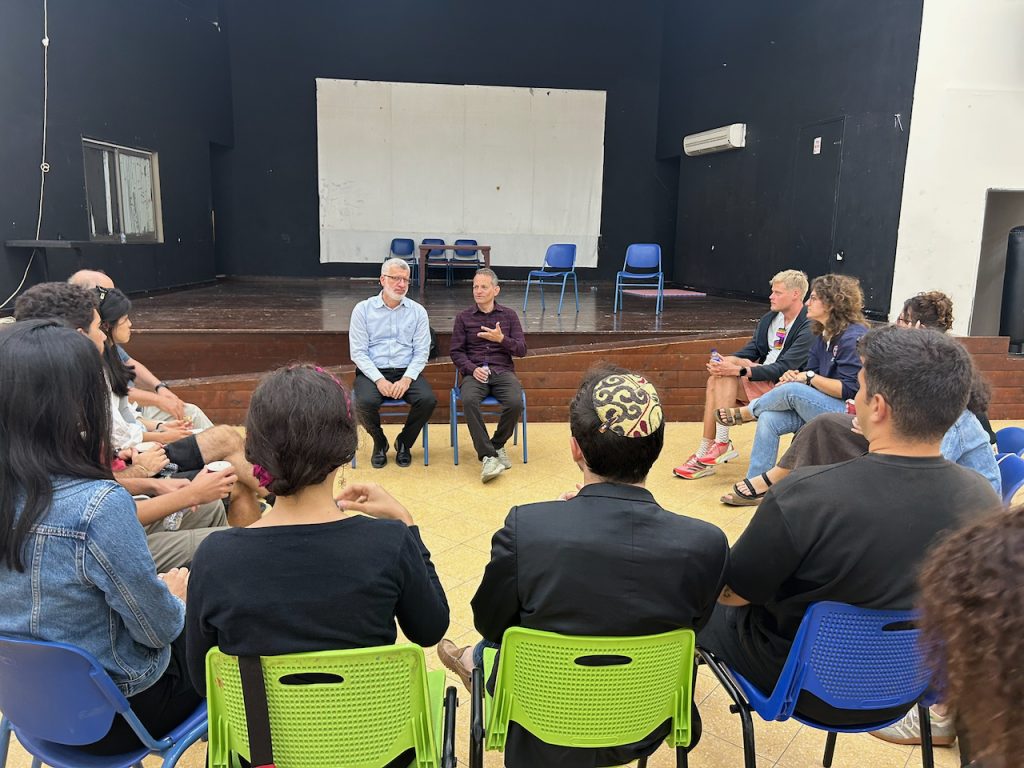
In recent weeks, the Cotler Fellows have participated in a series of lectures examining questions of Arab social and political life in Israel, international law, Holocaust memory, and Israeli national security.
On Sunday, May 3, the Fellows visited Kafr Qasim, an Arab city in central Israel, where they met with Sheikh Safwat Freij, the head of the Islamic Movement in Israel. In a candid and wide-ranging discussion, Sheikh Freij addressed the legacy of the 1956 Kafr Qasim massacre as well as the broader social and political dynamics shaping Arab society and political participation within Israel today. Fellows engaged directly with Sheikh Freij through an extended question-and-answer session, gaining deeper insight into the complexities, tensions, and opportunities in Arab society in Israel.
The following week, on Sunday, May 10, the Fellows participated in a series of lectures focused on international law, Holocaust memory and remembrance, and Israeli security affairs. The day began with a lecture by Miriam Guetta of Haifa University titled “Human Shields in International Law vs. Sharia Law.” Guetta explored how the use of human shields is treated within international humanitarian law and compared these legal frameworks with perspectives found in Islamic jurisprudence. The lecture encouraged Fellows to consider the legal, ethical, and strategic dilemmas associated with modern armed conflict, particularly in the context of asymmetric warfare.
The Fellows then heard a lecture by Dr. Carl Yonker, the Institute’s academic director, on the Japanese diplomat Chiune Sugihara, who helped thousands of Jewish refugees escape Europe during the Holocaust by issuing transit visas in defiance of his government’s orders. Dr. Yonker examined the role of figures such as Sugihara in Holocaust education and public memory, raising broader questions about the emphasis often placed on heroic rescuers rather than on victims or perpetrators of the Holocaust. The discussion prompted reflection on how societies construct narratives of historical atrocity and the ways in which stories of rescue and moral courage shape collective understandings of the Holocaust.
The program concluded with a lecture by a former Israeli security official, who provided the Fellows with an overview of Israel’s security and intelligence establishment and the challenges facing the country’s national defense apparatus. Drawing on his professional experience, the official discussed the structure and coordination of Israel’s security institutions and offered practical insight into the realities of Israeli security policy and decision-making. He also discussed the inherent tensions between intelligence work and democracy, balancing the needs of secrecy for security with transparency and what oversight and legal frameworks exist to prevent abuse and overreach.